Vacation Rentals & Clubs
Seacrest Resort: Hilton Head, SC
When RMC Resort Management took over Seacrest Resort in Hilton Head, they needed 76 condominium units outfitted, standardized, and guest-ready — fast.
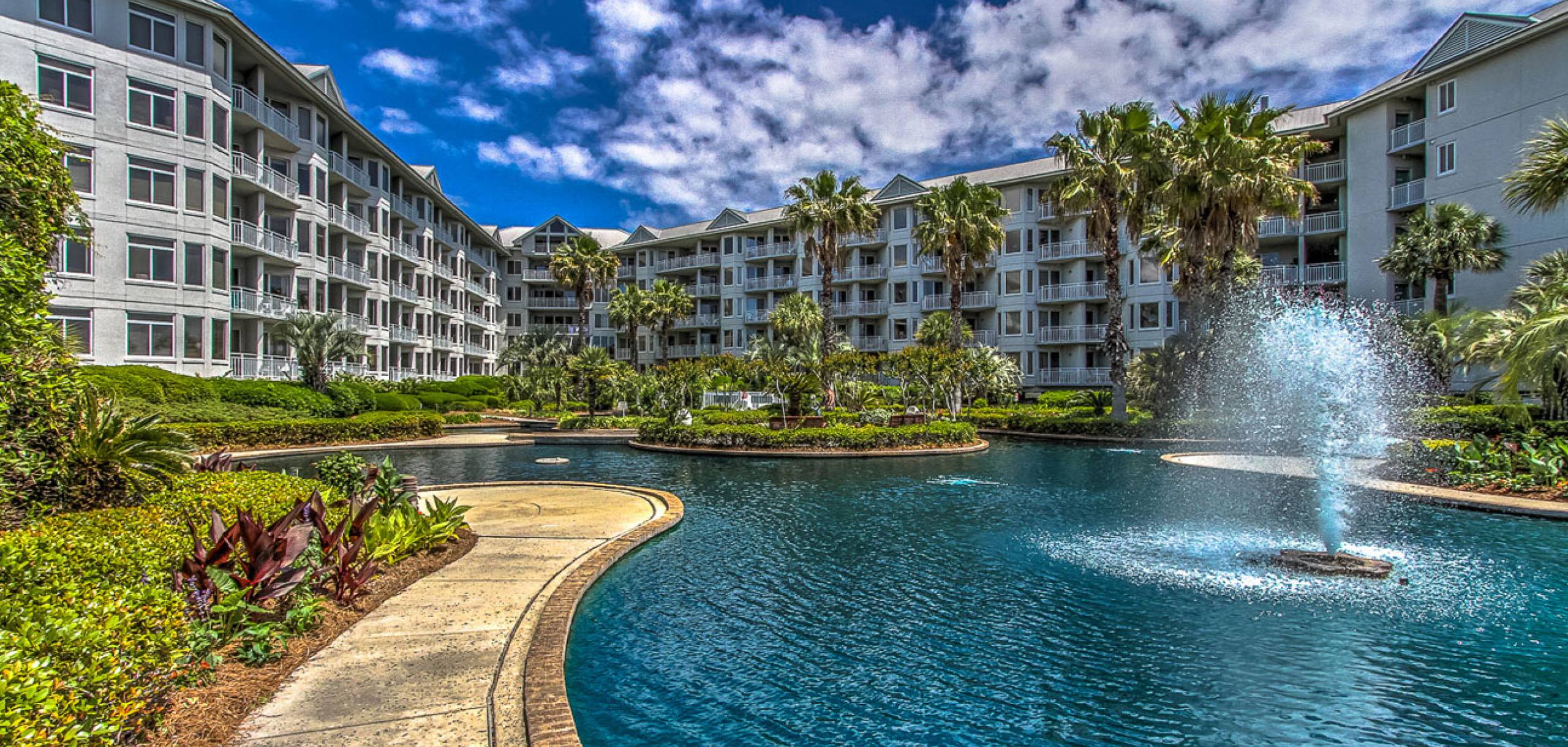
When RMC Resort Management took over Seacrest Resort in Hilton Head, they needed 76 condominium units outfitted, standardized, and guest-ready — fast.
Property managers don’t have the luxury of a slow rollout. When RMC Resort Management took over Seacrest Resort in Hilton Head, they needed 76 condominium units outfitted, standardized, and guest-ready — fast. More units were planned. Replenishment would be ongoing. Whatever system got built for phase one had to hold up for everything that came after it.
That kind of project doesn’t succeed on product selection alone. It succeeds on logistics.
The Seacrest project called for 76 units in the initial phase, with 100 planned in total. Each unit needed a complete, consistent OS&E package — linens, amenities, and everything else that defines a guest’s first impression of a rental property.
The challenge wasn’t just volume. It was the operational reality of receiving and distributing bulk OS&E across dozens of units without a large internal labor force dedicated to the effort. On-site sorting, unit-by-unit distribution, tracking what went where — that overhead adds up quickly and slows everything down.
They also needed products that could actually be replenished. In a high-turnover rental environment, items wear out and need replacing. Sourcing from a one-time collection of boutique vendors sounds appealing until you’re trying to replace 40 sets of the same towel two years later.
Every decision in the execution plan was made with operational simplicity in mind.
Products were selected from in-stock inventory — not custom orders, not long lead-time imports. That kept timelines tight and made future replenishment straightforward. When a unit needs restocking six months from now, the same products are available. No reselection process. No delays.
Before anything left the warehouse, every item was pre-packed by unit number. When deliveries arrived on-site, each box corresponded to a specific unit. No sorting. No figuring out what goes where. RMC’s team could move floor to floor and unit to unit without the logistical overhead that typically slows a rollout like this down.
Deliveries were phased and organized by floor, so installation could proceed in sequence rather than all at once.
February 19: Initial order placed.
March 27: First shipments out the door.
Five weeks later: 76 units complete.
RMC placed multiple large replenishment orders after the initial rollout. The system worked — and it kept working.
The infrastructure established at Seacrest wasn’t built just for phase one. The product selection, the packing methodology, the delivery structure — all of it was designed to repeat cleanly as more units come online.
For vacation rental operators, that kind of continuity is rare. Most procurement models require renegotiating and recoordinating with every new phase. The Seacrest framework eliminates that friction.
76 units Initial phase delivered and guest-ready
100 units Total planned property scope
5 weeks Order to completion on first phase rollout
In-stock only Product strategy designed for reliable long-term replenishment
Pack-by-unit Every delivery organized by unit number, eliminating on-site sorting
Ongoing Multiple replenishment orders placed following initial delivery
Guest experience requires consistency. Scale creates complexity. Sterling Collective solves both.
Ready to see what's possible? We'll take a look at your current project load and show you exactly how our Vision Delivery process gives you the infrastructure to scale.